Ines Griffin · 8 October 2026
Filter Upgrades Deliver Dual Wins for Cost Control and Sample Integrity in Academic Research Spaces
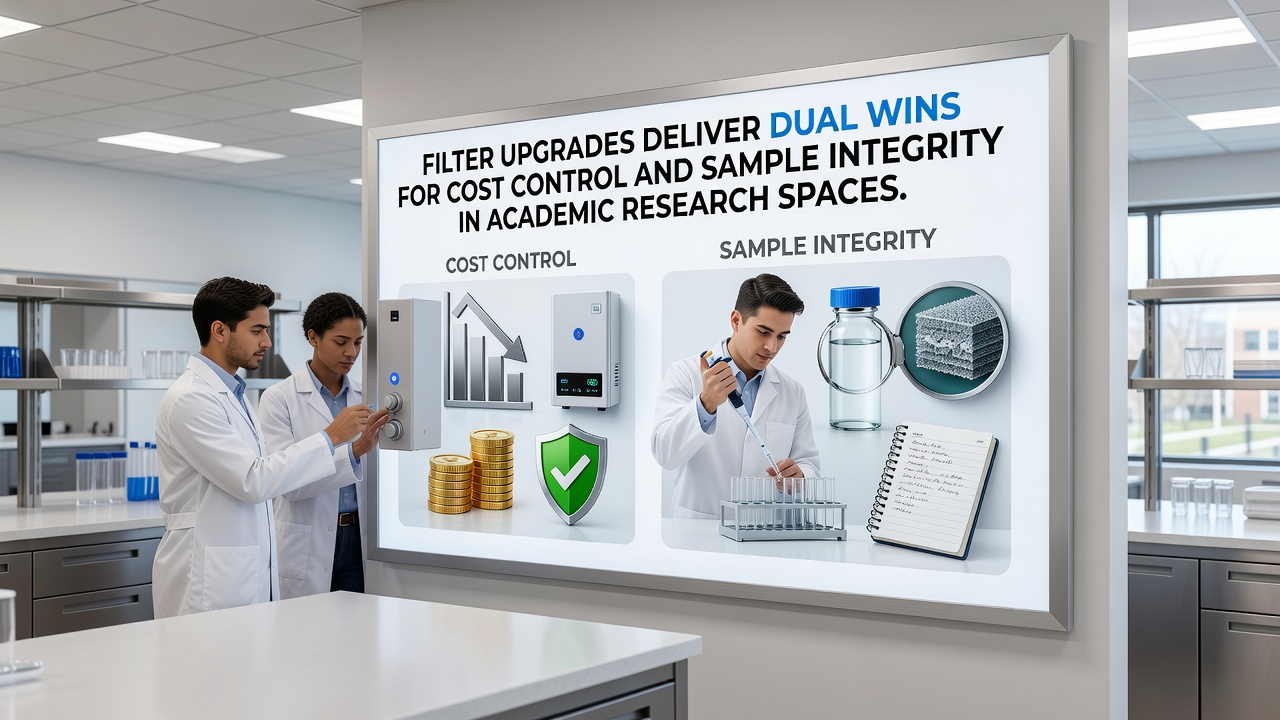
Academic research facilities across multiple regions now face mounting pressure to maintain precise environmental controls while managing operational budgets, and filter upgrades have emerged as a practical response that addresses both needs at once. Institutions report that newer filtration technologies extend service intervals, reduce energy consumption during continuous operation, and protect sensitive samples from airborne contaminants that previously compromised experimental results. Data from laboratory performance audits shows that upgraded systems achieve these outcomes through higher particle capture efficiency combined with lower pressure drops across the filter media.
How Filter Technology Supports Research Operations
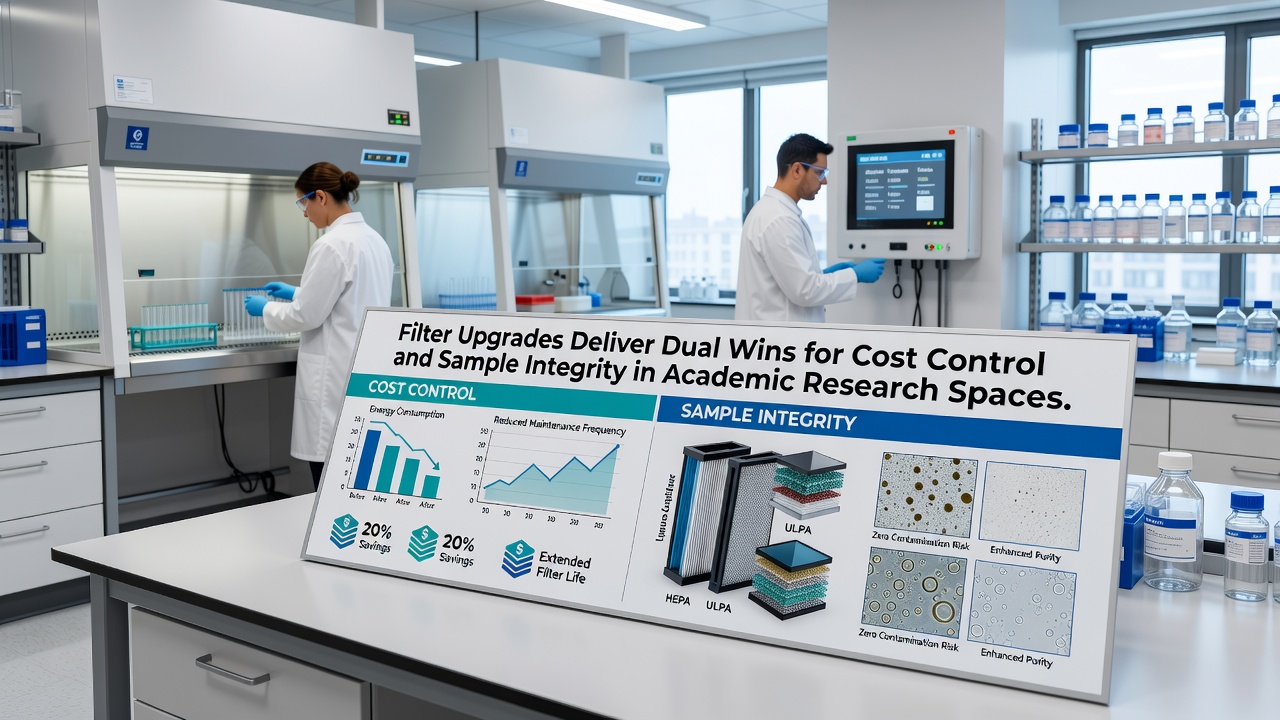
Standard HEPA and ULPA filters have long formed the backbone of air handling in academic cleanrooms, yet older units often require frequent replacement because their media loads quickly under typical research activity levels. Newer designs incorporate nanofiber layers and electrostatic enhancements that maintain airflow rates longer, which cuts the number of changeouts per year and lowers associated labor costs. Researchers at facilities that completed upgrades in early 2025 noted that annual filter replacement cycles dropped from four to two in several high-use rooms, while energy meters recorded measurable decreases in fan power draw. These changes matter because academic labs run equipment around the clock to support ongoing experiments in fields such as molecular biology and materials science.
Equipment manufacturers have adjusted their product lines to meet updated performance benchmarks issued by standards organizations, and facilities that adopt the revised models gain extended warranties when they document proper installation. One European consortium of universities tracked filter performance across twelve sites and found that the upgraded units sustained ISO class ratings with fewer interventions even when researchers introduced volatile reagents that previously accelerated filter degradation.
Cost Reductions Observed After Implementation
Budget reports from university facilities offices indicate that filter upgrades produce savings through multiple channels rather than a single line item. Reduced replacement frequency lowers both material purchases and the specialized disposal fees tied to contaminated filters. Lower airflow resistance allows HVAC systems to operate at reduced fan speeds without sacrificing air changes per hour, which trims electricity expenses that often represent a large share of lab operating costs. In one documented case, a mid-sized research building in North America recorded a 17 percent drop in monthly energy charges for air handling after retrofitting its main cleanroom suite during the summer of 2025.
Maintenance teams also report fewer emergency service calls because the newer filters resist clogging that once triggered pressure alarms during peak activity periods. These operational improvements free staff time for preventive tasks instead of reactive repairs, and facilities directors note that the cumulative effect helps keep annual budgets stable even when utility rates rise. Government funding agencies in several countries have begun to include filtration performance metrics in grant review criteria, which encourages institutions to prioritize upgrades that demonstrate measurable efficiency gains.
Protecting Sample Integrity During Experiments
Sample contamination remains a leading cause of invalidated data in academic research, and airborne particles represent a persistent risk in shared laboratory spaces. Upgraded filters capture a broader range of particle sizes while maintaining consistent airflow, which reduces the chance that dust or microbes reach open containers or sensitive instruments. Studies published by research consortia show that rooms equipped with the latest filter generations experienced fewer incidents of culture plate contamination compared with matched control spaces that retained older units. This improvement holds particular value for work involving cell lines, protein crystallography, and semiconductor materials where even minor particle exposure can alter results.
Facilities that schedule upgrades ahead of major grant-funded projects gain an added layer of assurance because the enhanced filtration supports longer periods of uninterrupted experimentation. In October 2026 several academic networks plan coordinated rollouts timed to coincide with new equipment installations, allowing teams to verify baseline performance before critical data collection begins. Observers note that these coordinated efforts also simplify compliance documentation when labs undergo external audits for biosafety or cleanroom certification.
Integration With Existing Laboratory Infrastructure
Retrofitting filter systems into established buildings requires careful coordination with existing ductwork and control systems, yet case examples demonstrate that the process can proceed without extended downtime when planned during academic breaks. Engineering teams evaluate pressure mapping and airflow patterns before selecting filter grades that match room classifications without over-specifying, which avoids unnecessary capital expense. Training programs for facilities staff now include modules on monitoring differential pressure across new media so that operators can detect loading trends before performance drops below acceptable thresholds.
Software platforms that integrate with building management systems provide real-time dashboards showing filter status across multiple buildings, and these tools help prioritize replacements based on actual usage rather than fixed calendars. Universities that adopted such platforms alongside physical upgrades report more accurate forecasting of maintenance budgets and fewer instances of over-ordering replacement stock.
Looking Ahead for Academic Facilities
Continued development of filter media focuses on balancing capture efficiency with sustainable material sourcing, and several pilot programs test bio-based components that maintain performance while reducing environmental impact at end of life. Academic researchers contribute to these efforts through collaborative testing that feeds performance data back to manufacturers. The dual benefits of cost control and sample protection position filter upgrades as a recurring consideration in facilities planning rather than a one-time capital project.
Conclusion
Filter upgrades in academic research spaces deliver documented improvements in both operational economics and experimental reliability when institutions select and install units matched to their specific airflow and contamination control requirements. Performance data collected across multiple regions supports the pattern that extended service life and reduced energy use accompany gains in particle retention that protect ongoing work. Facilities that align upgrade schedules with research calendars and integrate monitoring tools position themselves to sustain these advantages as standards and equipment continue to evolve.