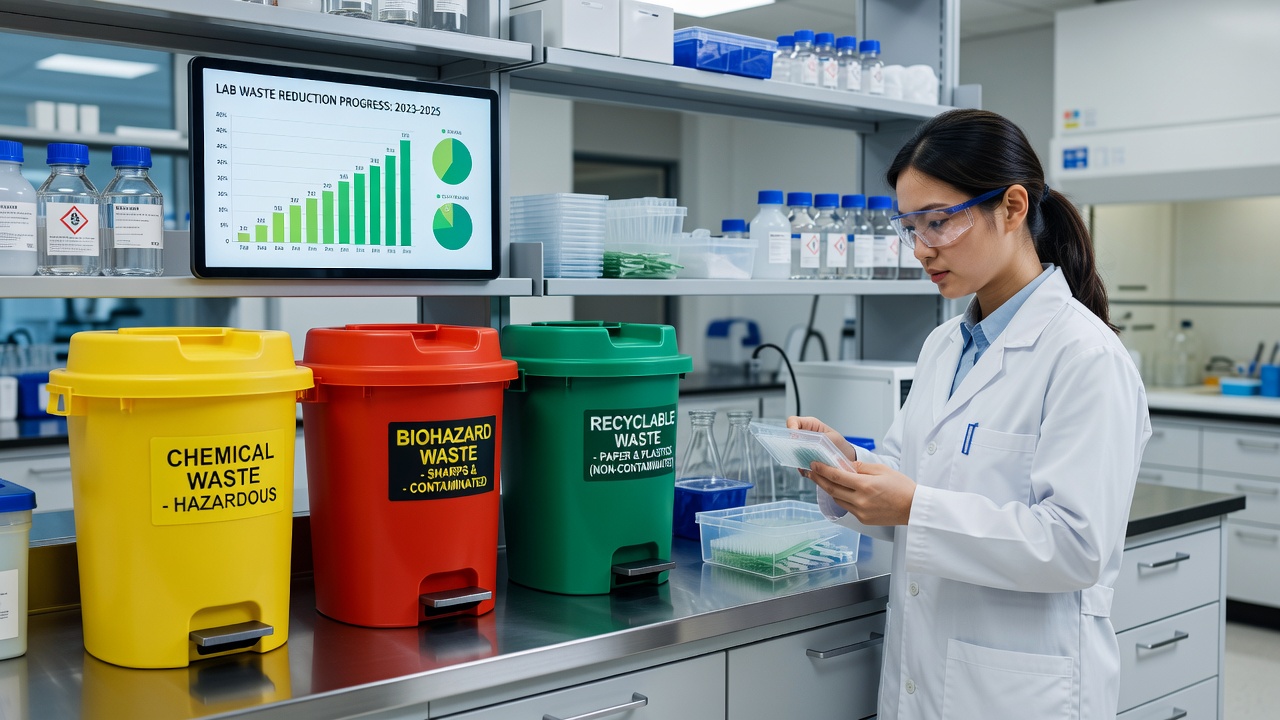
Eden Coleman · 22 October 2026
Academic Lab Waste Pressures Spur Revised Environmental Standards
Academic research facilities generate a steady stream of chemical, biological, and radioactive materials that require careful handling, and mounting concerns over disposal practices have pushed regulators and institutions toward updated environmental protocols, while data from multiple regions shows increasing volumes of hazardous waste tied directly to expanded laboratory operations in universities worldwide.
Current Waste Patterns in University Settings
Studies from research institutions indicate that academic labs produce significant quantities of solvents, reagents, and contaminated equipment each year, and figures from the United States Environmental Protection Agency reveal that educational facilities account for a notable share of small-quantity hazardous waste generators, whereas similar patterns appear in European and Canadian university systems where growth in life sciences programs has increased output of biological waste streams. Observers note that improper segregation at the source often leads to higher treatment costs downstream, yet many labs still rely on outdated collection methods that mix compatible and incompatible materials.
Factors Driving Protocol Updates
Regulatory bodies have responded with new guidelines because incidents involving leaks and improper storage have drawn attention to gaps in existing frameworks, and data compiled by the European Environment Agency shows rising numbers of compliance actions against academic sites over the past decade. Universities in Australia have introduced mandatory training modules after audits uncovered inconsistent labeling practices, while Canadian provinces updated their hazardous waste manifests to require digital tracking that links each container back to its originating lab. These changes align with broader efforts to reduce environmental releases, and institutions that adopted early versions of such systems report smoother inspections and fewer corrective orders.
One study from a major research university found that switching to centralized waste consolidation points cut transport-related emissions by integrating pickup schedules with other campus services, and the same report highlighted how real-time inventory software helped researchers avoid ordering excess chemicals that later required disposal.
Implementation Steps Across Regions
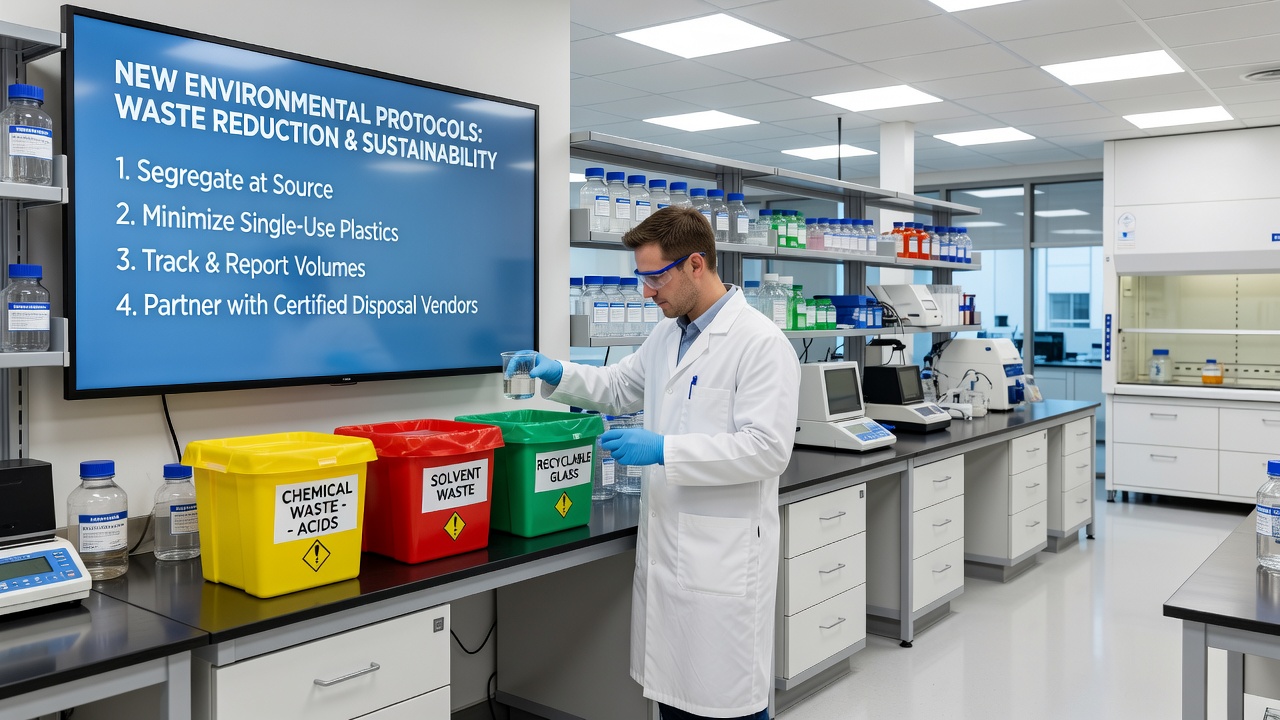
By October 2026 several jurisdictions plan to enforce stricter segregation rules for pharmaceutical and solvent wastes generated in teaching labs, and pilot programs already underway in select European universities demonstrate that color-coded bins combined with annual audits improve compliance rates. North American campuses have begun requiring principal investigators to submit waste minimization plans as part of grant applications, whereas Australian regulators emphasize cradle-to-grave documentation that follows materials from delivery through final destruction. Institutions that tested these approaches early found that staff participation increased when training sessions included practical demonstrations rather than only written guidelines.
Equipment upgrades such as ventilated cabinets for volatile storage and on-site neutralization units for certain acids have also entered standard specifications, and procurement teams now evaluate vendors based on take-back programs that accept empty containers for reuse. These adjustments address both regulatory expectations and internal sustainability targets that many universities publish in annual reports.
Training and Monitoring Practices
Effective protocols depend on consistent education, and universities that integrated waste handling modules into undergraduate lab courses report fewer incidents involving unknown substances. Digital logging systems allow environmental health and safety teams to spot trends in waste types before volumes spike, and some facilities now tie lab access privileges to completion of refresher courses. External audits conducted by third-party firms provide additional verification, while internal self-inspections catch issues such as faded labels or overfilled containers before they escalate.
Conclusion
Academic labs continue to adapt their waste management practices in response to evolving regulations, and the combination of tracking technologies, updated training, and regional policy shifts creates a framework that addresses both volume and hazard concerns. Institutions that align operations with these emerging standards position themselves for smoother regulatory interactions while supporting broader environmental goals across the research sector.